Rerouting Jackpine Trail
For a number of years, the ASTS had been looking at the route that leaves the Centennial Trail and goes straight uphill to Miller’s Bluff, the viewpoint that overlooks Armstrong. It has been used since 1967. Yes, it’s the shortest way to the viewpoint but this route was steep, rocky, eroding and not safe. Some years ago, an alternate route was cleared. It was better but still had some very steep, eroding sections.
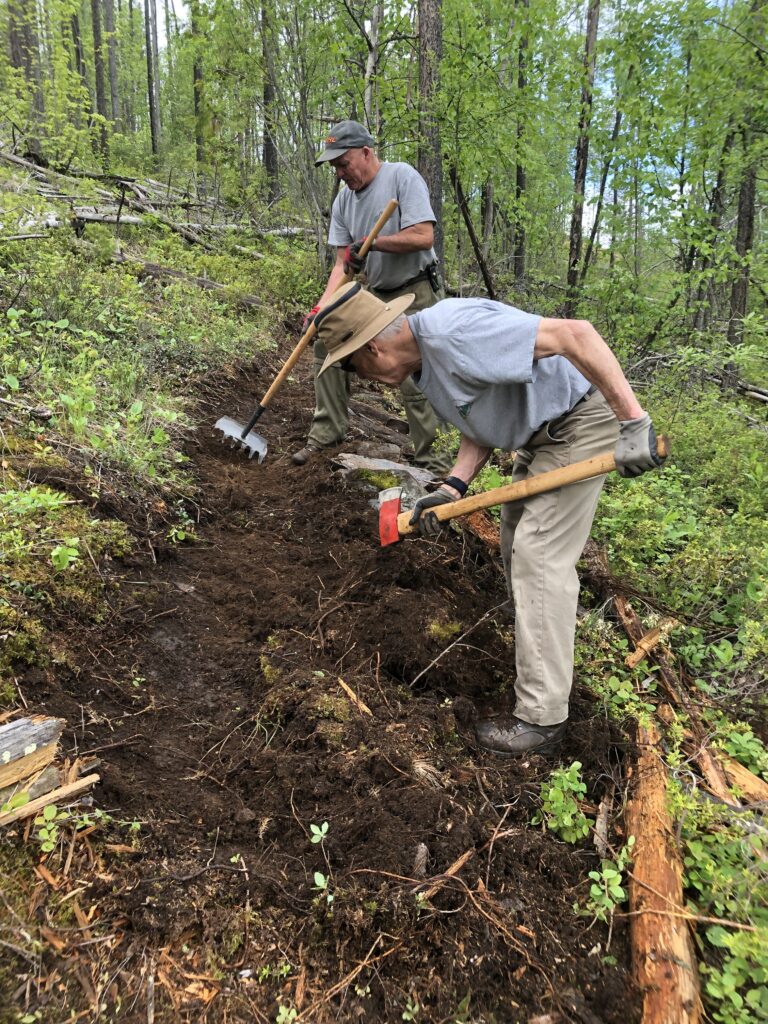
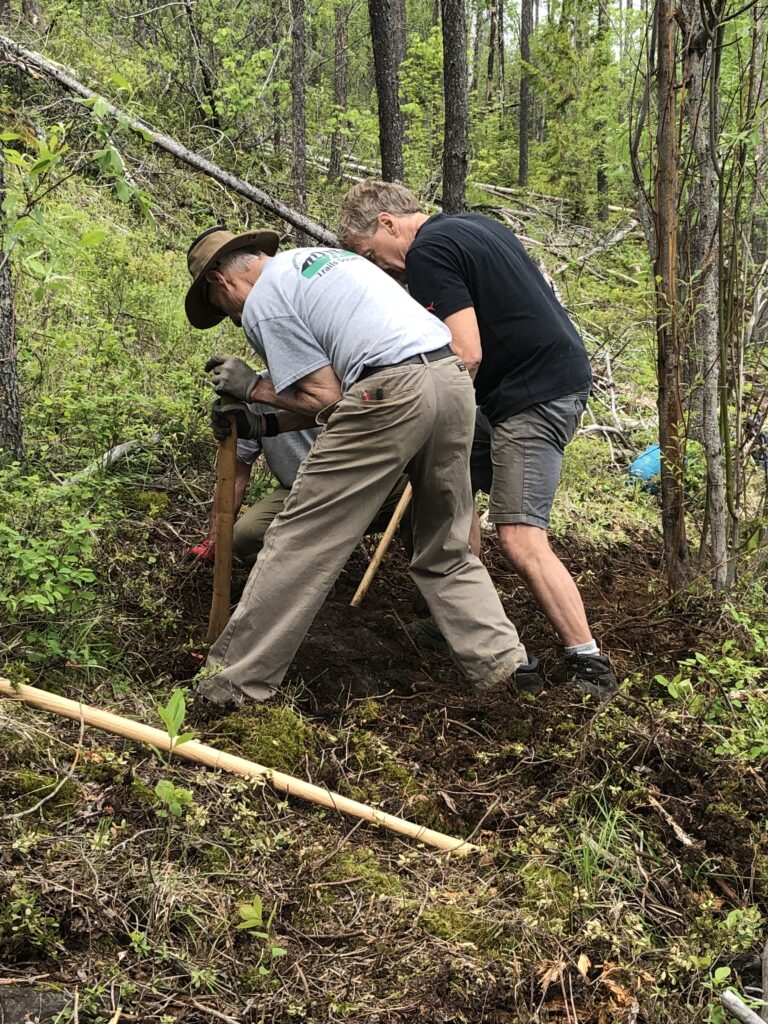
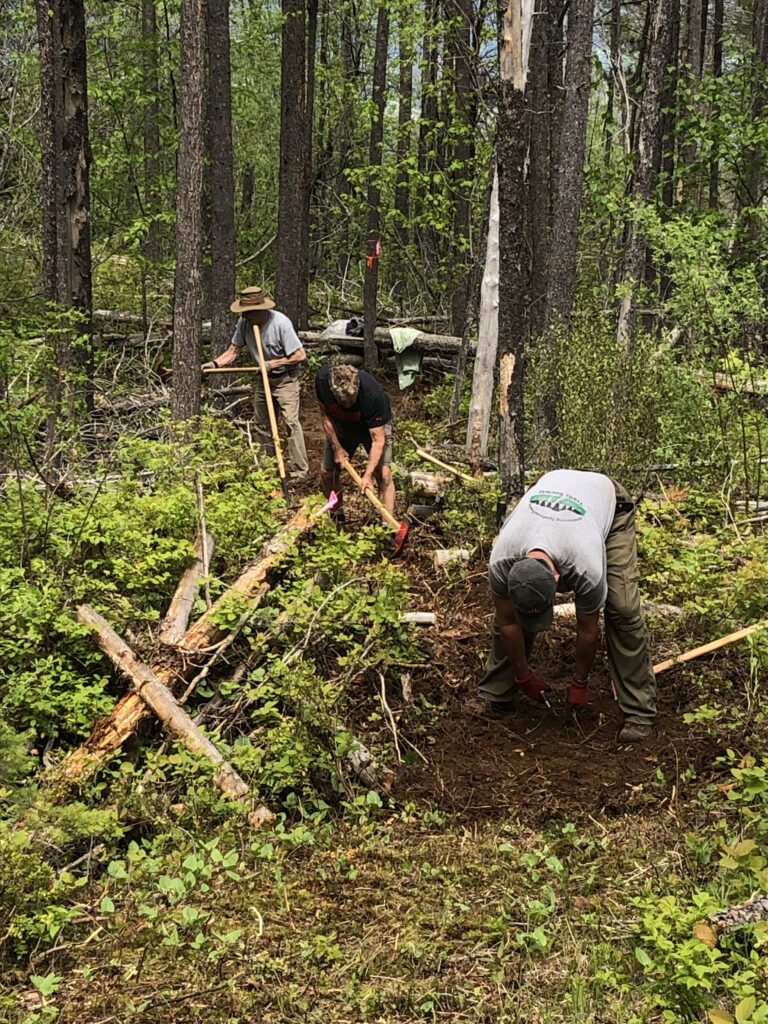
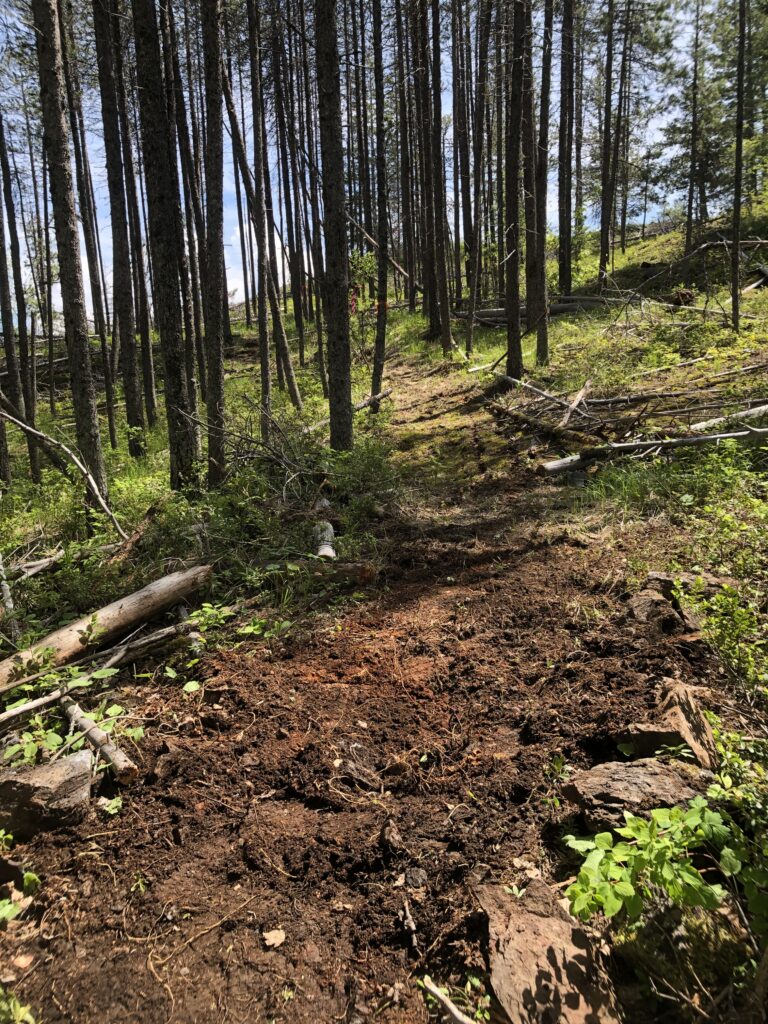
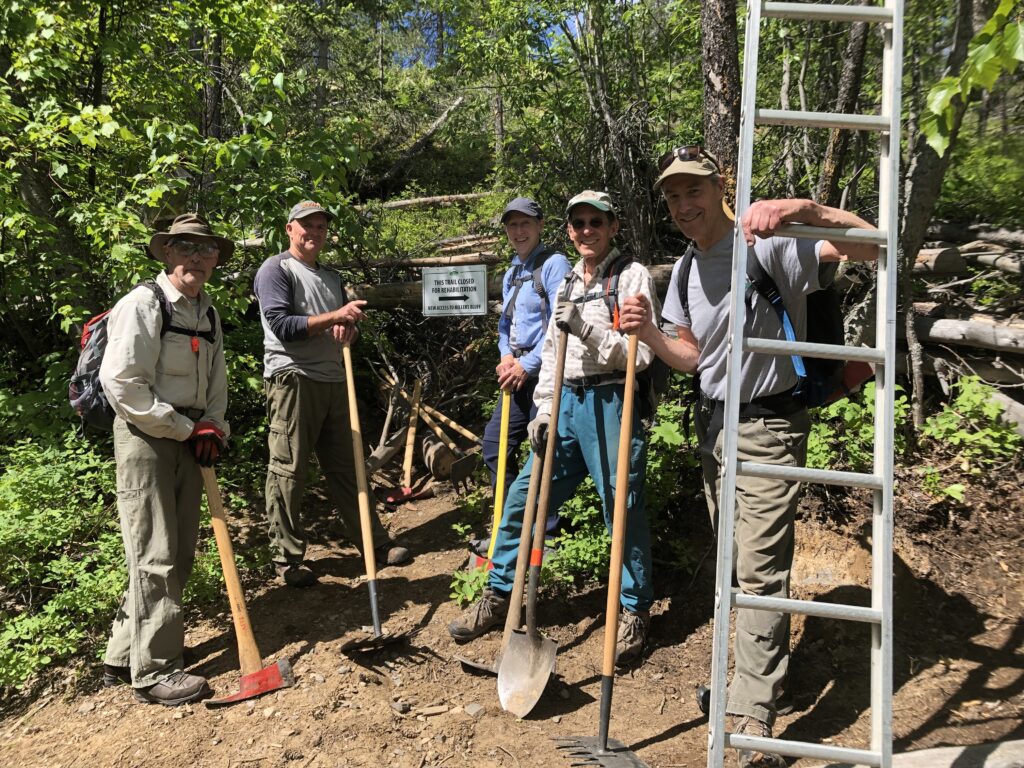
In 2025 it was decided that something needed to be done to stop the erosion and make the trail safer and more enjoyable for hikers. In April of 2025, after much discussion and on-the-ground legwork, a route was finally chosen and flagged. We wanted to keep the grade < 10% and if it exceeded it, it was only for very short sections. It took 11 work parties with 10 individual people in May to build it. The trail is mostly 1 m wide and mineral soil has been exposed. To make it safe deadfall, roots and rocks were removed and we tried to level it from side to side. A few water bars were created to divert water off the trail to prevent erosion and a couple of steps were created using flat rocks.
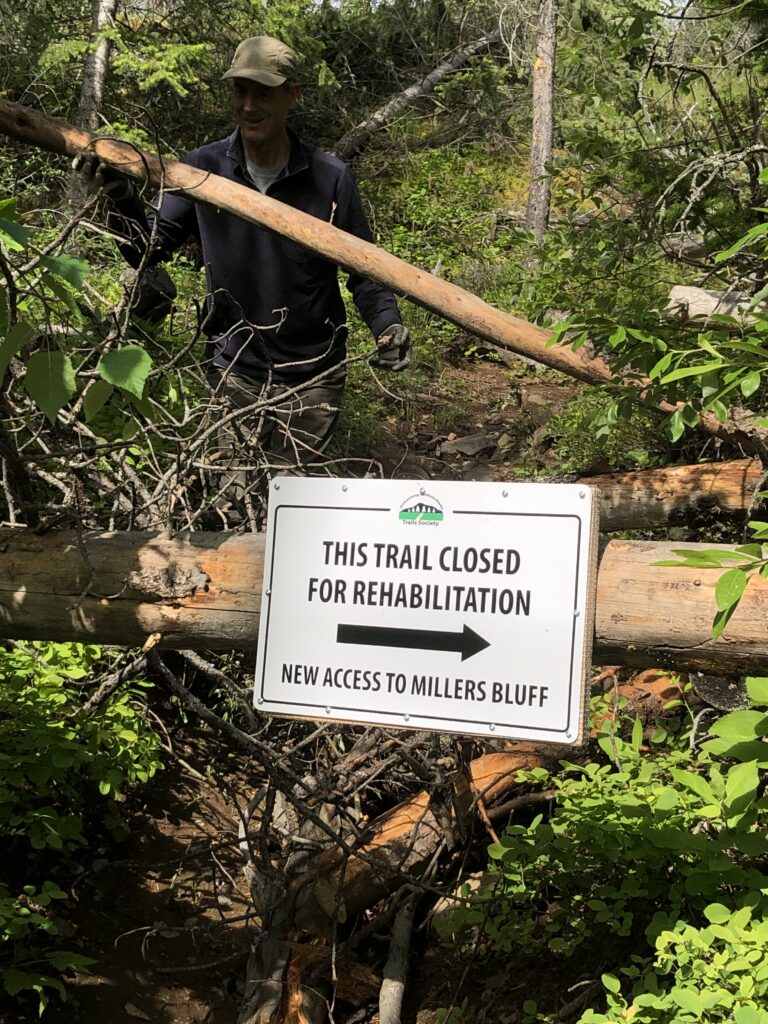
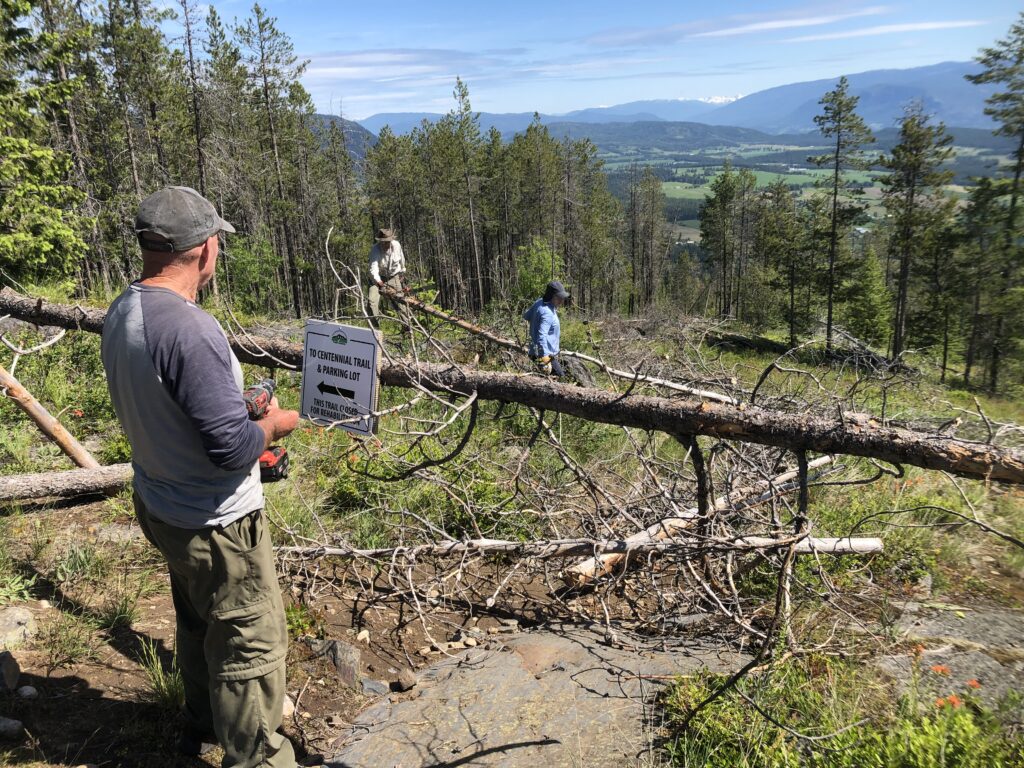
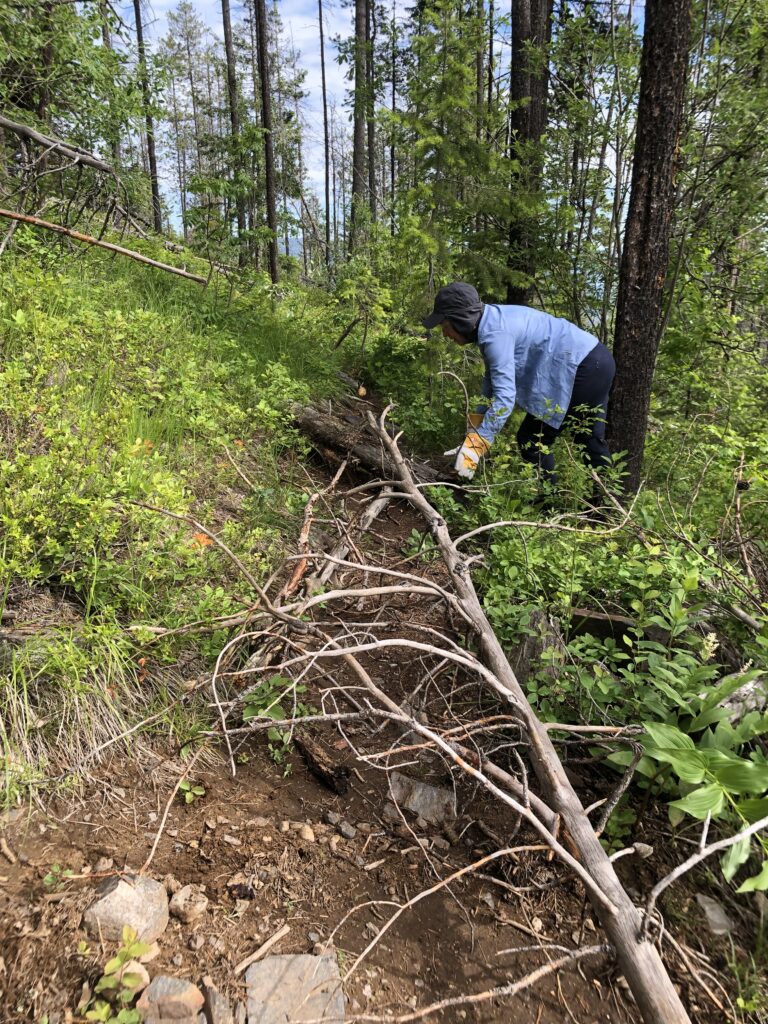
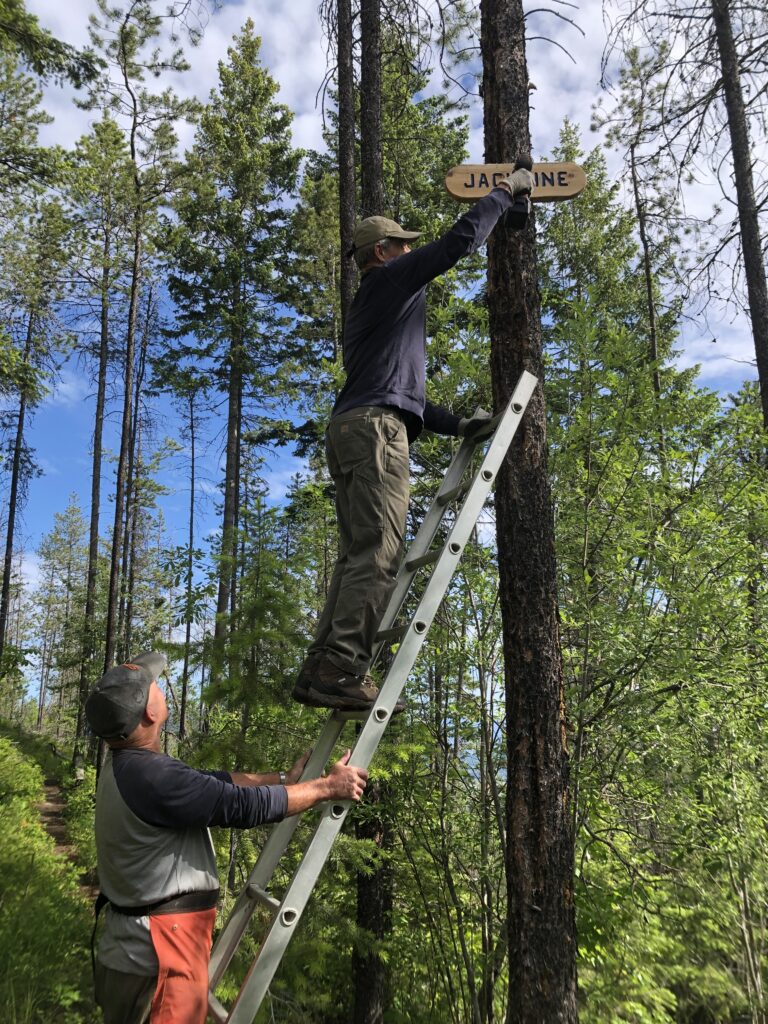
Both of the two old, steep trails were covered up with lots of woody debris and some rocks to discourage people from using them. Over time these trails should naturalize. We also erected signs at either end saying ‘Trail Closed’.
This new trail is ~260 m long, about 40 m longer than the second alternate route, and winds its way through the forest to arrive at the viewpoint. It’s a much more enjoyable and safer trail!
A letter to local governments regarding Mount Rose Swanson
Ltr.LocalGov.2025.03.04The ASTS is pleased to share Michele Hill’s (Hill Environmental) preliminary findings/desktop inventory report titled, “Rose Swanson Mountain Collation of Wildlife, Vegetation Species and Ecosystems at Risk Inventory Data” on vegetation and wildlife possibly found on Mt Rose Swanson (Mt RS). This has informed field study work to help fill the science gap so that we can better understand some of the other components that make up Mt RS’s values and how these values may be impacted by upcoming plans to log the mountain. Michele provides some key recommendations and raises further points pertaining to:
- Inconsistent Species Protection and Gaps
- The importance of maintaining wildlife corridors
- Questions about whether logging in fact provides wildfire fuel mitigation
- Mt RS being rich in species Biodiversity
- The need for a Forest Hydrology Assessment
For further information click on the link and see the full report.